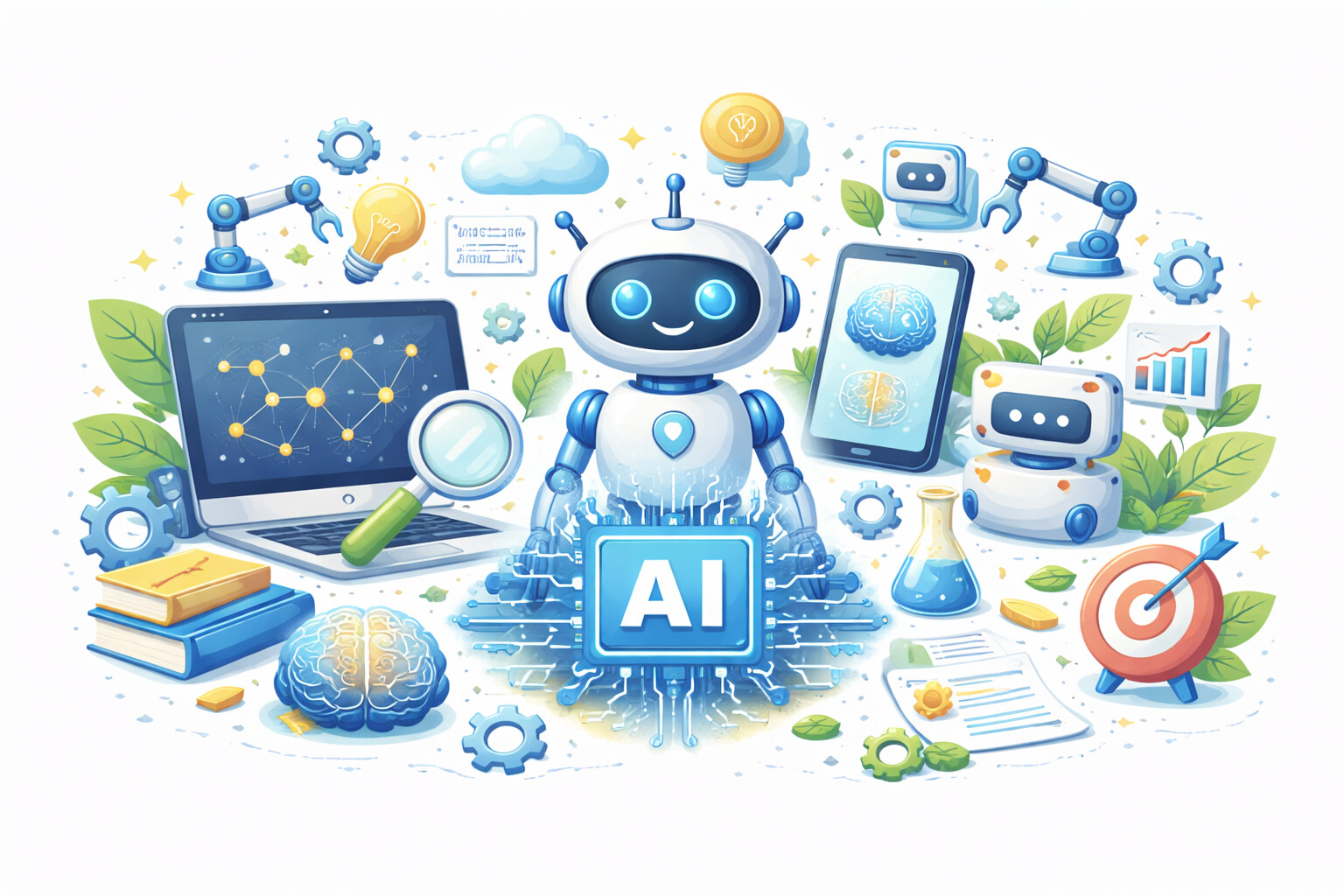

Artificial Intelligence: How AI Is Transforming the Digital World
Artificial Intelligence (AI) is no longer science fiction. It has become one of the most influential technologies of our time, shaping how we work, communicate, and build products. From recommendation systems and chatbots to medical diagnostics and automation, AI is rapidly changing the digital landscape.
What Is Artificial Intelligence?
Artificial Intelligence refers to computer systems that are able to perform tasks that normally require human intelligence. These tasks include learning from data, recognizing patterns, understanding language, making decisions, and solving complex problems.
At its core, AI is about building systems that can adapt, improve, and act intelligently based on information.
Key Areas of Artificial Intelligence
1. Machine Learning
Machine Learning enables systems to learn from data without being explicitly programmed. It powers applications like spam detection, product recommendations, and predictive analytics.
2. Natural Language Processing (NLP)
NLP allows machines to understand and generate human language. This is the foundation of chatbots, voice assistants, translation tools, and text analysis systems.
3. Computer Vision
Computer Vision focuses on enabling machines to interpret images and videos. It is used in facial recognition, autonomous vehicles, quality control, and medical imaging.
4. Generative AI
Generative AI can create new content such as text, images, code, audio, and video. It is revolutionizing creative work, software development, and content production.
Why Artificial Intelligence Matters
AI delivers value by automating repetitive and time-consuming tasks, improving decision-making through data-driven insights, enabling personalized user experiences, and scaling processes that would otherwise require large human teams.
AI in Everyday Life
Artificial Intelligence is already deeply embedded in daily life through search engines, recommendation systems, smart assistants, fraud detection, navigation, and content moderation.
Challenges and Ethical Considerations
Despite its potential, AI also raises important questions around data privacy, bias, transparency, and the impact on jobs and skills. Responsible AI development requires clear guidelines and human oversight.
The Future of Artificial Intelligence
As AI models become more capable and accessible, we will see smarter automation, more powerful AI assistants, deeper integration into software, and new roles focused on AI strategy and governance.
Final Thoughts
Artificial Intelligence is one of the defining technologies of the modern era. Understanding its capabilities and limitations is essential for developers, businesses, and decision-makers alike.
